


Won the job, then found out it barely covered the parts?
For example: You sent a number to win the job, and only found out after that it barely covered the parts.
30 days free, no credit card required

Generated image, not a real person.
What it costs
A full day of work for close to nothing.
What owners do today
Gut feel, and a look at the bank account at the end of the month.
Find the floor before you write the number
Every job has a floor: the price where you do the work and end up with nothing. Work it out before you decide what to charge, not after the customer says yes.
The floor is three things added together. Write each one down for this job, even as a rough figure.
- Parts: what you paid for them, plus what it took to get them (the supply house run, delivery, the parts you return).
- Labor: the hours on site and the hours driving, times what an hour of that tech costs you, not just their wage. Payroll taxes, insurance and the truck are part of that hour.
- Overhead: this job's share of what you pay to stay open, such as rent, insurance, phones, software and your own office time. Spread it over the hours you actually bill in a year, not the hours you are open.
Add profit on purpose
Profit is a line you decide, not whatever is left over. Pick the amount you want this job to earn above the floor, and add it as its own step.
If you skip this step, every surprise on site comes out of your pocket: the stuck fitting, the second trip, the extra hour.
Compare the number you want to send with the floor
Now look at the price you were about to send. If it sits close to the floor, you have three honest choices, and each is better than finding out later.
- Raise the price, and say what the customer gets for it.
- Change the scope: a smaller option at a price that works, next to the full job.
- Walk away, knowing exactly why. A job below the floor costs you money to win.
Write the floor down where you quote
The floor is easy to forget in a customer's driveway. Keep your prices in one place, with your costs next to them, so the next quote starts from numbers you already checked instead of a guess.
More guides: A weekly routine for who still owes you; Ask customers for reviews, and remember to; Get written approval for extra work; Switch software without losing your customer list; The first month on new software, week by week; Price good, better and best options; HVAC estimates and invoices; Plumbing estimates and invoices; Electrical estimates and invoices; Roofing estimates and invoices; Solar estimates and invoices; Handyman estimates and invoices. All guides.
Margin warning
Build the estimate from your price book.
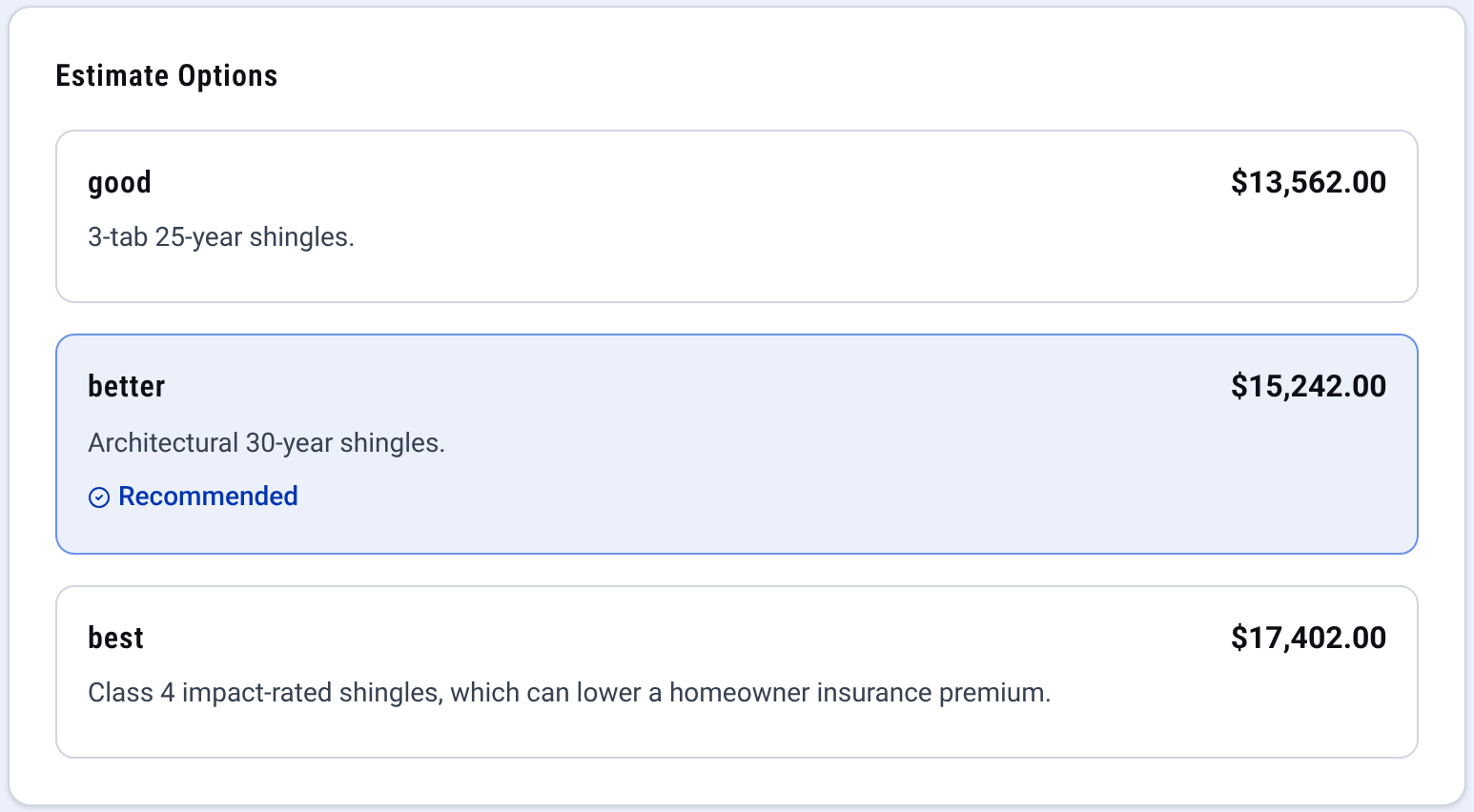
Estimate: good, better and best on one quote CONSTRUKTR warns you when the margin falls too low, before you send it.

Check it yourself
- Every step in this guide works on paper or in a spreadsheet. Nothing here needs CONSTRUKTR.
- Every CONSTRUKTR feature named here is on the features page, with the plan it comes with.
- Watch the real dashboard and phone app work on a demo company.
Questions owners ask
What if my price comes out higher than the other guy's?
Then you know why. A price built from the floor up is one you can explain line by line. Winning a job below your floor costs you money, whoever else bid on it.
Do I need software to do this?
No. Paper or a spreadsheet works. Software helps when you quote every week: in CONSTRUKTR you build the estimate from your own price book, and it warns you when an estimate's margin falls too low, before you send it.
When should I recheck my overhead?
Whenever something you pay every month changes, such as rent, insurance, a new truck or a new hire. Otherwise, once a year is a sound habit.
See it on your own jobs.
30 days free, no credit card required
Paid plans renew automatically. 100-day money-back guarantee on your first paid charge. Request a refund at support@construktr.ai. Cancel any time; access continues to the end of the paid period.